 Kaltreo Power
Published June 2026 · Updated September 2026
Diesel Filter Replacement Schedule
Quick answer: There is no single interval. Off-highway and genset engines run on hours: oil and filter every 250–1,000 service hours by sump size, fuel filters every 1,000 hours, air by restriction indicator. On-highway engines run on miles: 25,000–75,000 for oil and fuel by fuel-economy band, capped at 500 hours for vocational duty. Standby sets service annually whatever the hour meter says. Drain the water separator daily regardless.
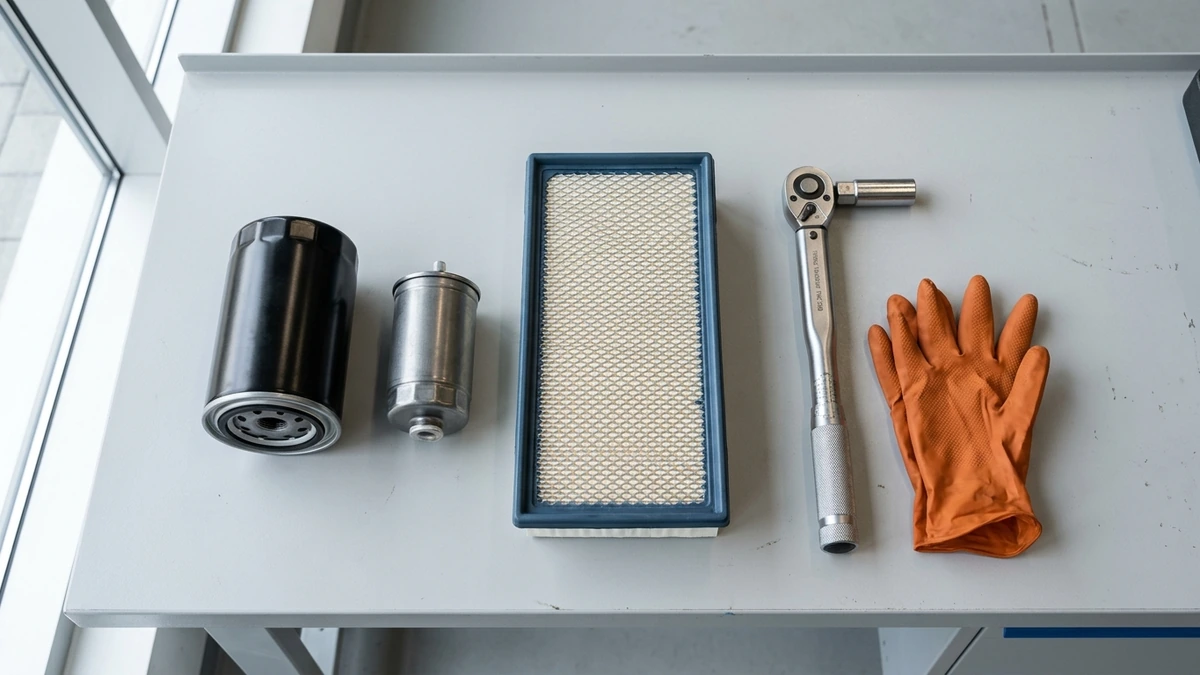
Start with duty cycle
Most published intervals quote a number with no engine attached. That number cannot exist, because duty cycle — not the part — sets the schedule.
Caterpillar proves the point inside one document. Its Operation & Maintenance Manual SEBU7148-09 publishes three schedules for the same 3508B–3516B hardware: hours-based for prime power, calendar-based for standby, and an oil interval that varies by sump size alone. One engine, three correct answers.
| Filter | Prime power | Standby | On-highway |
|---|---|---|---|
| Oil | 500 h | Yearly | 25,000–75,000 mi |
| Fuel (primary + secondary) | 1,000 h | Yearly | 25,000–75,000 mi |
| Air | By restriction | Yearly | By restriction |
| Water separator drain | Daily | Weekly | Daily |
Oil filters
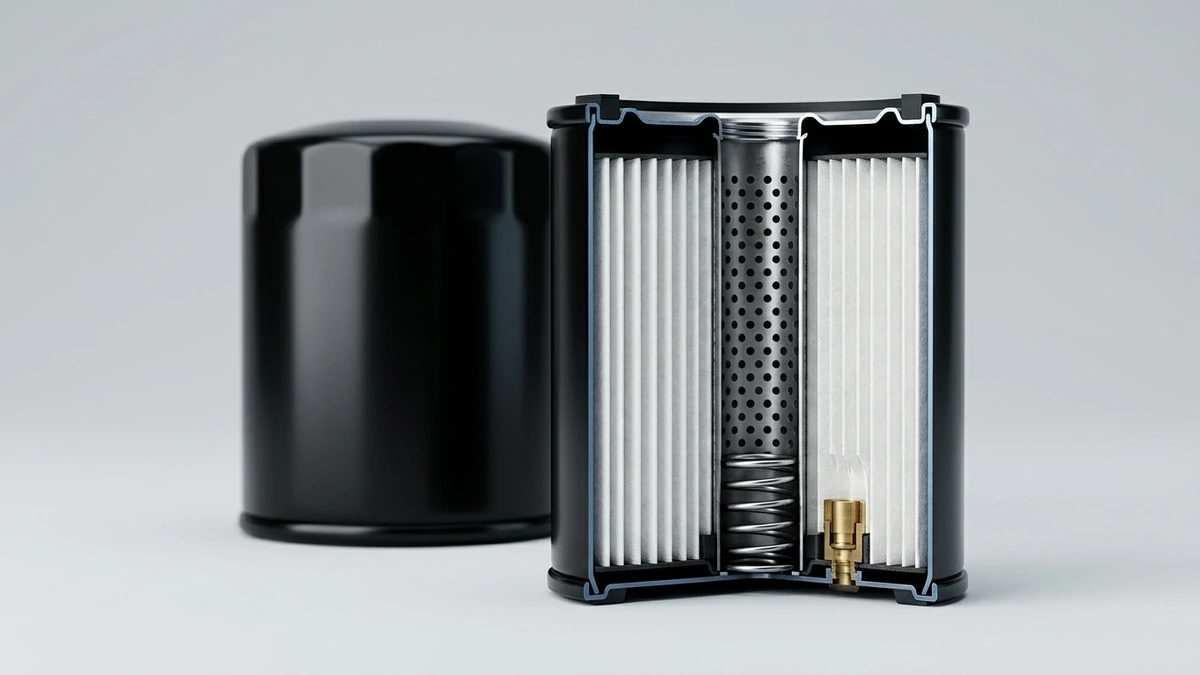
Off-highway. Cat sets the interval by sump size, and only “in the absence of scheduled oil sampling”: shallow sump 250 h, standard 500 h, deep 1,000 h. Prime power sets sample oil every 250 hours against a 500-hour drain.
On-highway. Cummins Bulletin 5410641 bands the X15 by fuel economy, always capped at 500 hours:
| Duty | Oil drain and filter |
|---|---|
| Severe (<5.5 mpg) | 25,000 mi / 500 h / 6 mo |
| Normal (5.5–6.5) | 35,000 mi / 500 h / 6 mo |
| Light (>6.5) | 50,000 mi / 500 h / 6 mo |
Synthetic oil does not extend this. Cummins is explicit that synthetic and semi-synthetic oils may suit extreme arctic or heat conditions but “DO NOT EXTEND Oil Drain Intervals”. Extended-drain hardware does — up to 80,000 miles with OilGuard on light duty.
Why the interval exists. Filter Manufacturers Council bulletin 88-3R2 puts bypass valves at 10–30 psid typical, some as low as 4 and as high as 75. Past that, unfiltered oil circulates. The bulletin names “improper oil drain and filter change intervals” as a cause of collapsed centre tubes, ending in possible seizure of a piston, rod or main bearing. Cummins caps allowable pressure drop across the filter at 172 kPa (25 psi).
Fuel filters
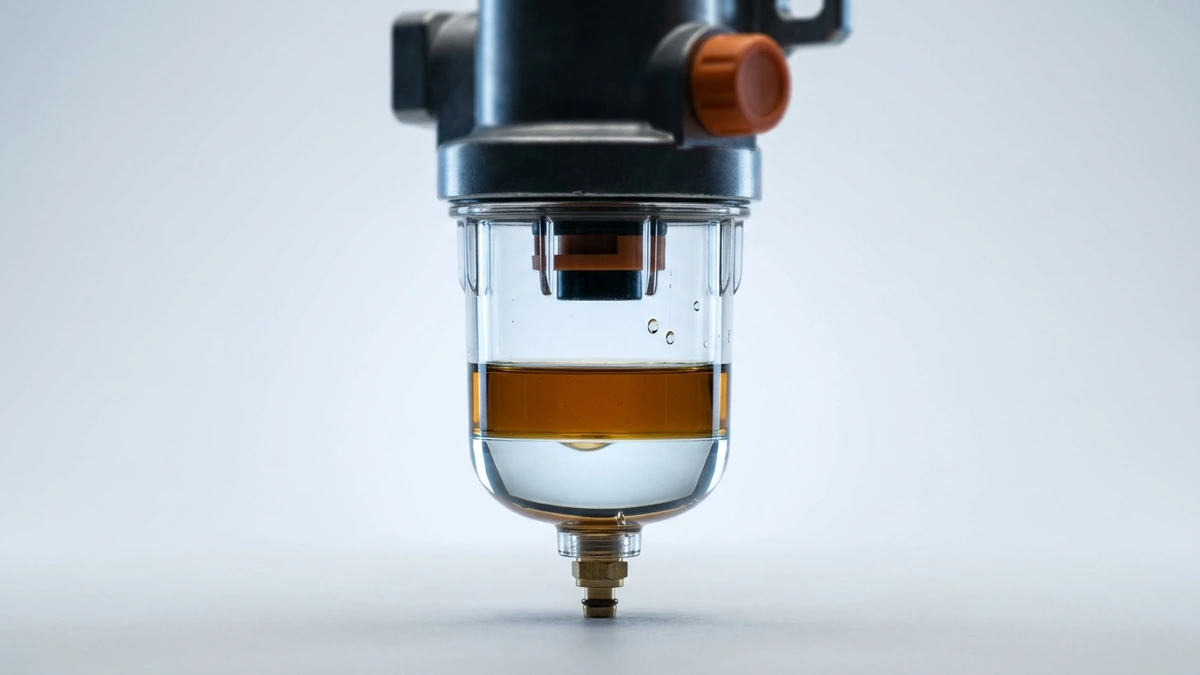
Intervals. Cat services primary and secondary filters every 1,000 service hours on prime power, or annually on standby. Cummins ties the fuel filter to the same mileage bands as the oil drain: 25,000, 35,000 or 50,000 miles on EPA 2017 hardware.
Water matters more than the filter. Donaldson recommends draining water daily, and Cat schedules the same as a daily item on prime power. Water corrodes, damages injector nozzles and reduces lubricity — and on common rail systems the fuel is the only lubricant the pump and injectors get. Cummins caps fuel filter pressure drop at 600 kPa (87 psi).
Never pre-fill through the centre hole. Cummins instructs: “never pre-fill by pouring fuel in the center hole (clean side). Recommended procedure is to install filter dry and cycle the key switch on 3-4 times and allow the priming pump to fill the filter.” The centre hole is the clean side, so fuel poured in there never passes the media. If you must pre-fill — priming a large engine after it has run dry, say — Cummins directs you to “use the smaller outside holes (dirty side)” so the fuel flows through the element on its way in.
Air filters
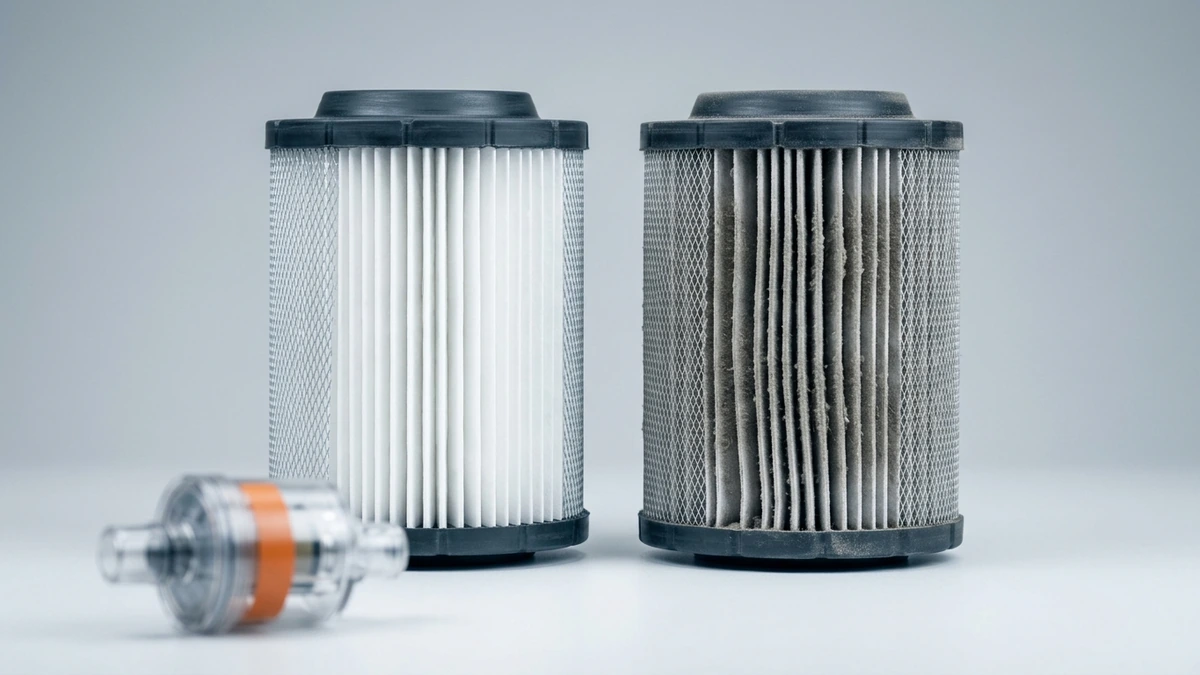
Do not use a fixed interval. Donaldson is explicit: “Servicing by engine hours, mileage, or visual checks isn't recommended. Rather, monitor and be guided by restriction levels.” A loaded element “can actually protect your engine better than a brand-new one”, because captured dust tightens the media.
Read the restriction, not the element. The service limit is engine-specific and belongs to your engine's data sheet. For the clean system, Fleetguard's default where no figure is published is 2.49 kPa (10 in H₂O) on-highway and 3.74 kPa (15 in H₂O) off-highway.
Dust changes everything. Fleetguard sizes air cleaners by dust holding capacity, and the spread between environments is roughly 5:1 — about 25 g/CFM for heavy (mining, construction, dirt-road convoys) against 5 g/CFM for light on-highway duty. Vehicles spending more than 20% of their time off-road should be treated as medium or heavy.
Edge cases
- Standby sets. Service annually even at near-zero hours. A standby genset may never trip a restriction indicator, so Cat replaces its air element yearly while listing the same part as “when required” on prime power.
- Mixed-age fleets. Intervals move between hardware generations. Normal-duty X15 oil and fuel filters go from 35,000 miles on EPA 2017 hardware to 60,000 on 2021 hardware — a 71% extension on the same engine family.
- Idle-heavy duty. Hours accumulate without miles. The 500-hour ceiling, not the mileage band, is what governs a truck idling on a yard.
- Biodiesel above B20. Expect short filter life for a tank or two, then normal service. Per FMC bulletin 06-1, the solvent effect loosens varnish already in your tank; once flushed, “subsequent fuel filter service intervals should return to normal”. Below B20 the effect is minimal.
- Oil analysis. Sampling supersedes every fixed number above. The condemning limits are specific to your engine, oil and laboratory, so no universal thresholds are published here — your lab supplies them with the results.
Frequently asked questions
How often should diesel engine filters be replaced?
By duty cycle. Genset and off-highway: oil 250–1,000 h by sump size, fuel 1,000 h, air by restriction. On-highway: oil and fuel 25,000–75,000 miles by fuel-economy band, capped at 500 h for vocational duty. Standby: annually.
Does synthetic oil extend the oil filter interval?
No. Cummins states synthetics do not extend oil drain intervals. Extended-drain filter hardware does.
How often should the water separator be drained?
Daily, independently of when the filter is replaced. Donaldson recommends daily; Cat schedules it daily for prime power, weekly for standby.
Should air filters be changed on a schedule?
No — by restriction. The exception is standby equipment, which Cat replaces annually because it may never accumulate enough hours to trip the indicator.
Should you pre-fill a new fuel filter?
Not through the centre hole — that is the clean side, so the fuel skips the media. Fit it dry and cycle the key switch three or four times. If you must pre-fill, Cummins says to use the smaller outside holes on the dirty side.
How tight should the filter be?
Hand-tight past gasket contact, never a wrench — see how tight an oil filter should be.
Servicing a fleet? Kaltreo supplies OE-equivalent oil, fuel and air filters as ready-made service kits, cross-referenced to Cummins, Caterpillar, Fleetguard, Donaldson and Baldwin numbers. Check the cross-reference tables or request a quote →
Sources: Cummins Bulletin 5410641 (X15, EPA 2017), rev. 11/17 · Cummins Bulletin 6504123 (2021 X15 Performance Hardware), rev. 6/25 · Caterpillar SEBU7148-09, Operation & Maintenance Manual, 3508B/3512B/3516B Generator Sets, October 2009 · Filter Manufacturers Council TSB 88-3R2 and TSB 06-1 · Fleetguard Air Filtration catalogue, Section 5 · Donaldson technical articles on air filter servicing and diesel fuel contaminants · ISO 4548-12:2017, ISO 19438:2023, ISO 5011:2025. Intervals are quoted for the engine families named and are not transferable to other engines — always follow your own engine manual.